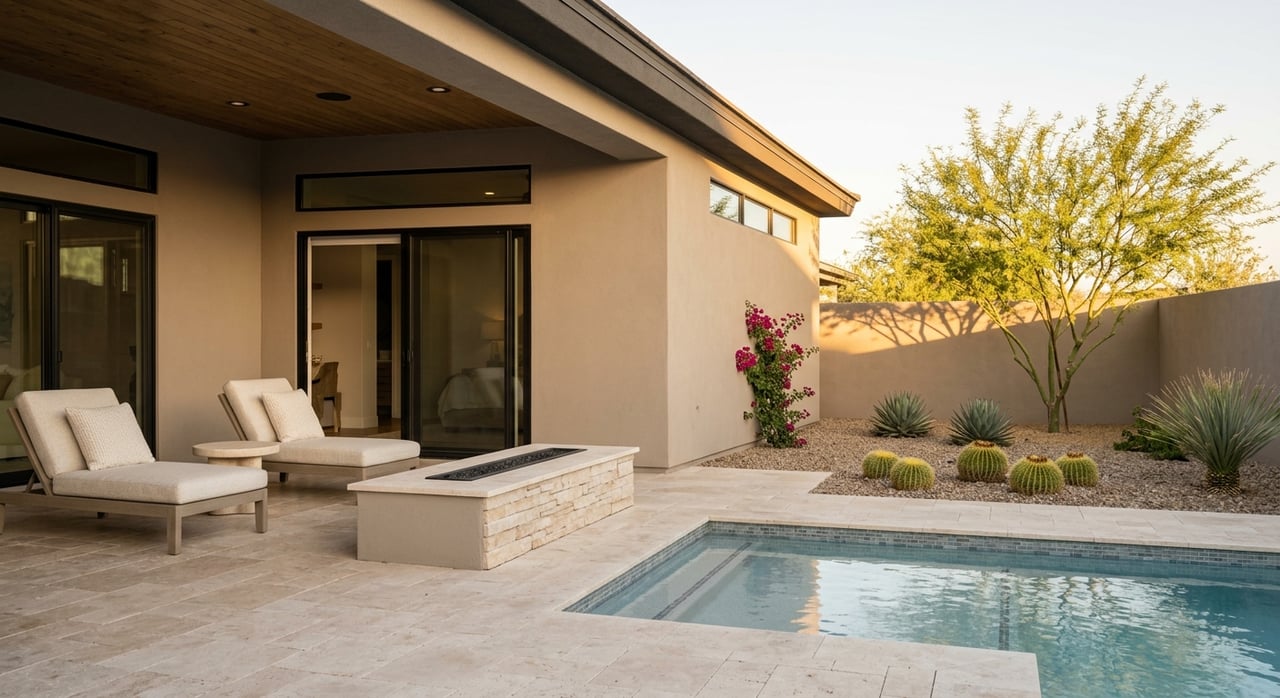
Thinking about moving to Mesa? You are not alone. Mesa is one of the largest cities in the East Valley, and for many relocation buyers, the challenge is not whether there are housing options. It is figuring out which part of the city, which home type, and which commute setup make the most sense for your day-to-day life. This guide will help you understand Mesa’s housing mix, price ranges, and practical search filters so you can make a more confident move. Let’s dive in.
Why Mesa draws relocation buyers
Mesa offers scale, variety, and access. Census QuickFacts places the city’s July 1, 2025 population at 513,656 across 138.7 square miles, which means you are looking at a large, spread-out city rather than one small, uniform housing market.
That size matters when you relocate. A home that looks great on paper may feel very different once you factor in commute patterns, maintenance needs, and how close you want to be to work or regional travel routes.
Mesa also works for a wide range of buyers because it serves as both a residential city and an employment center. Major local employers include Mesa Unified School District, Banner Health, the City of Mesa, The Boeing Company, Walmart, Maricopa County Community College, Dexcom, DriveTime Automotive Group, Frys Food Stores, and Home Depot.
What Mesa housing looks like
Mesa’s housing stock is not one-size-fits-all. The city’s draft 2025-2029 Consolidated Plan says single-family detached homes make up 56% of Mesa’s 218,778 housing units, making them the most common housing type.
That same plan says nearly 67% of the housing stock was built after 1980. In practical terms, that means you will find a mix of older established areas, later suburban development, and newer planned communities depending on where you search.
If you are relocating from outside Arizona, this is important to understand early. Mesa is better viewed as a collection of different housing pockets than a single market with one style, one age range, or one price point.
Single-family homes dominate the market
If you want a yard, more storage, or more separation from attached neighbors, Mesa gives you the broadest selection in single-family housing. Zillow’s Mesa single-family search showed 1,245 listings, with examples starting in the upper $300,000s and stretching into higher price tiers.
That range makes Mesa workable for several buyer profiles. You may be looking for an entry-level house, a move-up home, or a property with more space and features, and the single-family segment is where you will usually see the most variety.
Condos and townhomes support low-maintenance living
If your goal is simpler upkeep, a lock-and-leave setup, or a lower price entry point, attached housing deserves a close look. Zillow’s Mesa townhome search showed 227 results, with examples ranging from $185,000 to $650,000 and many clustered around $220,000 to $375,000.
Mesa condo inventory was smaller but still meaningful, with 62 listings shown and examples ranging from $170,000 to $375,000. Several were in the roughly $225,000 to $317,000 range.
For many relocation buyers, this is the cleanest starting point. If you are prioritizing convenience, lower exterior maintenance, or a seasonal-use lifestyle, condos and townhomes can help you stay flexible without jumping straight into a larger detached home.
What home prices look like in Mesa
Mesa sits in a market that offers choice, but you still need realistic price expectations. Zillow’s Mesa housing snapshot for May 31, 2026 reported an average home value of $436,451 and a median list price of $452,733.
That tells you the city is not strictly a bargain market, but it is also not limited to one narrow price band. Buyers can still find options below the median list price, especially if they are open to attached homes or more modest single-family properties.
Realtor.com’s Mesa under-$400K search page showed 1,621 homes. That is a helpful signal for buyers working with a firmer budget, because it suggests there is still meaningful inventory under that threshold.
Use price brackets as a guide, not a rule
Portal snapshots are useful for planning, but they are not hard cutoffs. They show the shape of the market at a moment in time, not a complete pricing study.
That means your real search should stay flexible. A relocation plan usually works best when you combine budget with home type, commute goals, and maintenance preferences instead of treating price alone as the deciding factor.
Which part of Mesa has newer homes?
If newer construction is high on your list, southeast Mesa is the area to watch. The city’s Eastmark Community Plan outlines a 3,200-acre master-planned area between Ellsworth and Signal Butte Roads south of Elliot Road.
The same planning materials point to regional freeway access, a future SR 24 connection, and planned bus service. For relocation buyers, that combination often makes southeast Mesa stand out when you want newer housing and easier regional access.
This does not mean every buyer should focus only on the southeast. It means that if your priority list starts with newer homes, modern subdivision planning, and stronger freeway connections, that part of Mesa deserves an early look.
How to think about commute in Mesa
Commute planning should happen before you fall in love with finishes or floor plans. Census QuickFacts reports a mean travel time to work of 24.7 minutes in Mesa, which gives you a useful citywide baseline.
Because Mesa is geographically large, one side of the city can feel very different from another in daily driving time. That is especially true if your work is in Tempe, Phoenix, Scottsdale, Chandler, Gilbert, or another East Valley location.
Transit and regional access matter
Mesa’s transit system includes local bus service, express service, Mesa Downtown Buzz, Mesa Fiesta Buzz, and Metro Light Rail through Valley Metro. The A Line runs east-west from Gilbert Rd/Main St to the Downtown Hub, linking Mesa with broader regional rail connections.
If public transit, light rail access, or reduced driving is important to you, these details should be part of your home search from the beginning. Location relative to transit can shape your daily routine just as much as square footage can.
Start with the job location
For relocation buyers, the smartest first filter is usually the work hub. Before comparing kitchens, backyards, or upgrades, compare how each area of Mesa connects to where you need to go most often.
If your job is tied to major employer areas, medical facilities, education campuses, aerospace employers, or regional business centers, freeway access and route efficiency can save time and stress. In a city this large, commute convenience is not a small detail. It is often one of the biggest quality-of-life factors.
How quickly homes are moving
Mesa gives buyers options, but it is still important to be prepared. Zillow reported a median time to pending of 27 days.
That suggests a market where you usually have time to evaluate choices, but not unlimited time to delay on the right property. If you are moving from out of area, a focused shortlist can make a big difference.
A practical relocation plan often includes:
- narrowing your search by commute first
- choosing your preferred home type early
- setting a realistic monthly budget
- separating must-haves from nice-to-haves
- being ready to act when the right match appears
A practical way to narrow your Mesa search
Relocation gets easier when you simplify the decision process. Instead of trying to study all of Mesa at once, start with three basic filters: home type, budget, and travel pattern.
If you want low maintenance, start with condos and townhomes. If you want more outdoor space or storage, begin with single-family homes. If your work requires regional driving, give extra weight to freeway and transit access before you judge cosmetic features.
You should also keep neighborhood age and housing condition in mind as part of your evaluation. Mesa’s consolidated plan notes that homes most likely to contain substandard conditions are typically in the west and southwest areas of the city, which makes property-level review especially important if you are considering older housing stock.
That does not mean avoiding older areas by default. It means looking carefully at condition, updates, and overall fit so your choice supports both your budget and your comfort level.
Why local guidance matters when relocating
Out-of-area buyers often lose time by looking at too many homes that do not really fit. A more useful approach is to narrow the field based on how you want to live in Mesa, then compare the best options within that framework.
That is where local guidance can help. Mark Palacio serves Greater Phoenix with a strong focus on East Valley residential buyers, sellers, and relocation clients, and his approach centers on clear communication, honest advice, and tailored property matching rather than sending every available listing.
If you are planning a move to Mesa, the goal is not just to buy a house. It is to choose the right part of the city, the right maintenance level, and the right commute setup for your life now and over the next several years.
When you are ready to sort through Mesa with a practical strategy, connect with Mark Palacio for personalized guidance on East Valley relocation, curated home options, and a smoother path to your next move.
FAQs
Is Mesa mostly single-family housing?
- Yes. Mesa’s draft 2025-2029 Consolidated Plan says single-family detached homes are the most common housing type and make up 56% of the city’s housing units.
Which part of Mesa has the newest homes?
- Southeast Mesa is the strongest starting point for newer construction, especially areas tied to the Eastmark Community Plan.
What price range should you expect for Mesa condos and townhomes?
- Current portal snapshots showed condos from about $170,000 to $375,000 and townhomes from about $185,000 to $650,000, with many attached-home options clustered in the low-to-mid $200,000s through the $300,000s.
How long is the typical commute in Mesa?
- Census QuickFacts reports a mean travel time to work of 24.7 minutes for Mesa.
Is there still housing inventory under $400,000 in Mesa?
- Yes. A Realtor.com Mesa under-$400K search page showed 1,621 homes, which suggests buyers with tighter budgets still have meaningful options.
What should relocation buyers prioritize first in Mesa?
- Start with your commute and work location, then narrow by home type, maintenance level, and budget so you can focus on the areas that fit your daily life best.