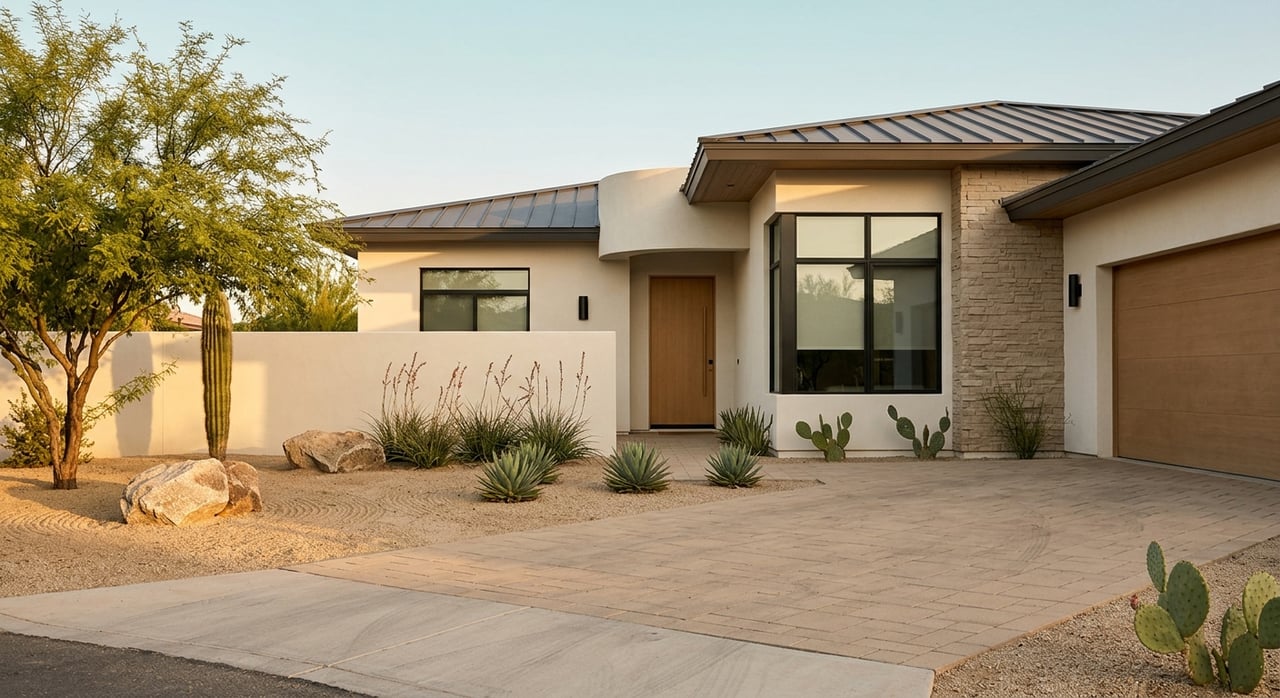
Wondering where your next Scottsdale home should be if your current place no longer fits? That is a common move-up question, especially in a city this long, varied, and price-sensitive. Scottsdale is not one single neighborhood experience, and knowing how the city changes from south to north can help you match your budget, commute, and lifestyle goals more confidently. Let’s break it down.
Why Scottsdale Feels So Different
Scottsdale stretches about 31 miles across 184.5 square miles, so moving within the city can feel like moving between very different markets. Census QuickFacts estimates about 246,170 residents, a 67.0% owner-occupied housing rate, and a mean commute time of 21.6 minutes.
The city also has a strong single-unit housing base, with 73.8% of residents living in single-unit homes. More than half of Scottsdale households earn $100,000 or more annually, which helps explain why the city offers a broad range of move-up options, from townhomes to larger single-family homes on spacious lots.
How Scottsdale Is Organized
Scottsdale uses adopted character-area plans to guide different parts of the city rather than treating the whole market the same way. The city lists seven adopted character areas: Cactus Corridor, Shea Area, Desert Foothills, Dynamite Foothills, Greater Airpark, Old Town, and Southern Scottsdale.
For you as a move-up buyer, that matters because lot size, home age, daily driving patterns, and overall neighborhood feel can change a lot depending on where you look. In simple terms, south Scottsdale often brings older housing and more mixed-use surroundings, central Scottsdale tends to offer established suburban neighborhoods, and north Scottsdale usually steps up in price, newer feel, and amenity access.
Old Town and Southern Scottsdale
If you want a lower-maintenance move-up option or a home with renovation potential, Old Town and Southern Scottsdale may stand out. Old Town is the city’s cultural, historic, commercial, and tourism center, and the area has one of Scottsdale’s strongest mixed-use identities.
The Old Town character plan applies roughly from Chaparral Road to Earll Drive and from 68th Street to Miller Road. Southern Scottsdale planning documents note that much of the housing stock and commercial space in that area was already more than 30 years old at the time of adoption, which helps explain the established feel.
This part of Scottsdale can work well if you want to stay closer to dining, shops, and local activity. The city says Old Town includes more than 90 restaurants, 320 retail shops, and more than 80 art galleries.
Mobility is another draw here. Scottsdale’s free trolley runs three fixed routes with 20-minute weekday service and connections to Valley Metro and Tempe Orbit, making south Scottsdale one of the more transit-friendly pockets in the city.
From a pricing standpoint, Old Town has recently posted a median sale price of about $559,812, with homes taking around 71 days to sell. That can make it a useful reference point if you want Scottsdale access without jumping straight into the city’s higher-priced central or north-end neighborhoods.
Best fit for Old Town and South Scottsdale
You may want to focus here if you are looking for:
- A lower-maintenance condo, townhome, or smaller detached home
- An older home with update potential
- Closer access to shops, restaurants, and activity centers
- Better trolley access than many other parts of Scottsdale
Central Scottsdale Neighborhood Types
For many move-up buyers, central Scottsdale is the balance point. You get a more established suburban setting than Old Town, but you do not have to move all the way to far north Scottsdale to find larger homes or more traditional neighborhood layouts.
McCormick Ranch and Scottsdale Ranch are good examples of this middle-of-the-city category. Recent market snapshots show McCormick Ranch at a median sale price of about $959,677 and Scottsdale Ranch around $850,000, with homes generally selling in about 53 to 68 days.
These areas often appeal to buyers who want established subdivisions, HOA communities, and a mix of detached homes, townhomes, and condos. If your goal is to move up in size or setting while keeping a practical location, central Scottsdale often deserves a close look.
Shea Area
The Shea Area Plan focuses on preserving neighborhood character along Shea Boulevard. It also emphasizes compatibility standards, single-story buildings near the Shea scenic corridor, and better trail and transit links.
For you, that points to a part of Scottsdale where planning has focused on maintaining a consistent neighborhood pattern while improving everyday connectivity. It can be a helpful middle ground if you want central access with a more residential setting.
Cactus Corridor
The Cactus Corridor offers a different version of central Scottsdale. The city describes it as a diverse area with equestrian and lifestyle uses along with suburban subdivisions.
Historically, the heart of the area included low-density lots ranging from 35,000 square feet to 2.5 acres. If your move-up plan includes more land, more privacy, or a less compact neighborhood pattern, this area may deserve attention.
North Scottsdale Move-Up Options
North Scottsdale is where many buyers start looking when they want a newer feel, stronger amenity package, or a larger jump in home value and property scale. It is also where prices tend to move up fast.
Recent market data puts North Scottsdale at a median sale price of about $1,298,563, with homes taking around 61 days to sell. Within that broader area, Grayhawk was about $1,044,649, McDowell Mountain Ranch about $1,249,580, and DC Ranch about $2.5 million.
That spread matters because “North Scottsdale” is not one price point. Even within this section of the city, your options can range from upscale master-planned neighborhoods to significantly more expensive homes in amenity-rich enclaves.
What North Scottsdale often offers
This part of the city is often the best fit if you want:
- A bigger move-up budget to work with
- A newer-feeling neighborhood environment
- Master-planned community options
- Golf-oriented or amenity-rich surroundings
- Easier access to the far north side of Scottsdale
If you are comparing central Scottsdale to north Scottsdale, the choice often comes down to whether you value location balance or a larger lifestyle jump. Central areas can offer more established settings and a somewhat lower entry point, while north Scottsdale often asks for more budget in exchange for newer-feeling neighborhoods and broader amenity appeal.
Foothills and Desert-Edge Living
If your move-up goal is more space, more open views, and a stronger desert setting, the foothill areas may be the right match. These neighborhoods typically trade convenience for lot size and open space.
The Dynamite Foothills plan says the area’s long-term vision is to preserve a rural desert character. It also notes that existing densities are generally appropriate at 2- to 3-acre lots, with open space treated as critical.
The Desert Foothills plan covers roughly eight square miles between Dixileta Road, Jomax Road, the western boundary, and 96th Street. These planning details reinforce what many buyers notice right away: farther north and closer to the desert edge, Scottsdale often feels more spacious and less compact.
The McDowell Sonoran Preserve adds a major outdoor feature to this part of the city, with more than 60 miles of trails. The city describes it as the largest urban wilderness area in the United States, which makes this area especially relevant if trail access and desert scenery are high on your priority list.
Tradeoffs to expect
Foothill and desert-edge areas can offer a lot, but they come with practical tradeoffs:
- Longer drives for many daily errands and commutes
- Larger lots that may require more upkeep
- A less compact neighborhood pattern
- Higher importance of route planning if you commute across town
The Airpark Factor
The Greater Airpark area can matter more than buyers first assume, especially if your daily routine is tied to work, shopping, or quick regional access. The city describes this corridor around Scottsdale Airport as its largest industrial-zoned area and a growth area.
For move-up buyers, the Airpark is often most relevant when job proximity and convenience are priorities. If you want to reduce daily drive friction and stay close to a major employment and shopping corridor, this part of Scottsdale can play an important role in your search.
What Commute Style Means for Your Search
Scottsdale is still a car-oriented market overall. Citywide market data shows a Walk Score of 32, Transit Score of 23, and Bike Score of 56, so neighborhood choice often has a direct effect on how easy or demanding your daily routine feels.
The city also reports that more people come into Scottsdale for work than leave it, with 168,663 workers entering the city. That makes commute style a key move-up decision point.
Before narrowing your home search, it helps to ask:
- Do you work in Scottsdale or commute out?
- Are you driving to Tempe, Phoenix, or the airport often?
- Do you want trolley access or are you comfortable driving everywhere?
- Is outdoor access more important than being near shops and services?
A home that looks ideal on paper may feel very different once you test it against your real weekly routine. That is especially true in a city with such a long north-south span.
Budget Realities for Move-Up Buyers
Scottsdale offers clear move-up paths, but the pricing gaps are significant. According to the city’s 2025 Housing Needs Assessment, the 2024 median home value was $825,000 overall, $1.125 million for single-family homes, and $617,000 for townhomes.
The same report estimates the annual income required to afford the median-priced single-family home at $312,000, compared with $171,000 for a townhome. It also states that townhomes are the most accessible option for many households.
That can be useful if you want to move up in location before moving up dramatically in size. In Scottsdale, a well-placed townhome or lock-and-leave property may offer a practical step into a stronger submarket while keeping your budget more manageable.
A Simple Way to Narrow Your Options
If you are trying to decide where to focus, start with the type of move you actually want to make. In Scottsdale, most move-up decisions come down to four broad neighborhood types.
1. Lower-maintenance urban choice
Think Old Town and parts of Southern Scottsdale. This category fits buyers who want activity, older housing stock, and easier access to dining, retail, and trolley service.
2. Balanced established suburban choice
Think McCormick Ranch, Scottsdale Ranch, and parts of the Shea area. This group often works well if you want established neighborhoods, practical access, and a middle-ground move-up budget.
3. Newer-feel amenities choice
Think Grayhawk, McDowell Mountain Ranch, DC Ranch, and broader North Scottsdale. This is where many buyers look for a more noticeable lifestyle upgrade and master-planned surroundings.
4. Space-and-desert character choice
Think Cactus Corridor, Dynamite Foothills, and Desert Foothills. This category is best for buyers who want larger lots, open space, and a more rural desert edge feel.
Choosing the Right Scottsdale Fit
The best Scottsdale neighborhood for a move-up buyer is rarely about picking the most expensive area or the most recognizable name. It is about matching your next home to the way you actually live, drive, budget, and plan to use your space.
If you are selling one home while buying another, that match matters even more. A smart move-up strategy can help you weigh equity, timing, and neighborhood fit at the same time so your next step feels intentional, not rushed.
If you want help narrowing down Scottsdale options based on your price range, commute, and move-up goals, connect with Mark Palacio for clear, local guidance tailored to your next move.
FAQs
What neighborhood type is best for move-up buyers in Scottsdale?
- The best fit depends on your budget, commute, and lifestyle priorities. Old Town and Southern Scottsdale suit lower-maintenance buyers, central Scottsdale offers established suburban options, North Scottsdale fits bigger-budget amenity-focused buyers, and the foothills appeal to buyers who want more space and desert character.
What is the difference between central Scottsdale and North Scottsdale for move-up buyers?
- Central Scottsdale often offers established neighborhoods and a more balanced location, while North Scottsdale usually comes with higher prices, newer-feeling communities, and more amenity-rich master-planned options.
Are there more affordable move-up options in Scottsdale?
- Scottsdale remains expensive by local standards, but Old Town and townhome options can provide more accessible entry points than many central or north Scottsdale single-family neighborhoods.
What should Scottsdale move-up buyers know about commute patterns?
- Scottsdale is largely car-oriented, and commute style can strongly affect which area feels most practical. South Scottsdale has stronger trolley access, while buyers in foothill or far north areas should plan for longer drives.
Which Scottsdale areas offer larger lots for move-up buyers?
- Cactus Corridor, Dynamite Foothills, and Desert Foothills are the main areas to explore if you want larger lots, more open space, and a less compact neighborhood pattern.
Is Old Town Scottsdale a good fit for move-up buyers?
- It can be a strong fit if you want a lower-maintenance property, an older home with update potential, or closer access to shops, restaurants, galleries, and trolley service.